
The Wealth Multiplier Hiding in Plain Sight
Albert Einstein is famously (though apocryphally) credited with calling compound interest the “eighth wonder of the world.” Whether or not he said it, the truth behind the phrase remains undeniable. Compound interest isn’t only a financial concept; it’s a force multiplier for wealth. Yet, many investors, especially in developing economies, don’t fully grasp its power or how to wield it effectively.
This article unpacks the mechanics, strategies, and tools behind compound interest, with global and local (Nigeria, India, Ghana, South Africa, Philippines) investment insights. Whether you’re investing ₦50,000 in Nigeria or ₹10,000 in India, compound interest can be your most loyal ally in long-term wealth creation.
What Is Compound Interest in Investment?
Compound interest refers to the process where interest earned on an investment is reinvested to earn more interest. Unlike simple interest, which is calculated only on the principal, compound interest grows exponentially by building on both the principal and previously accumulated interest.
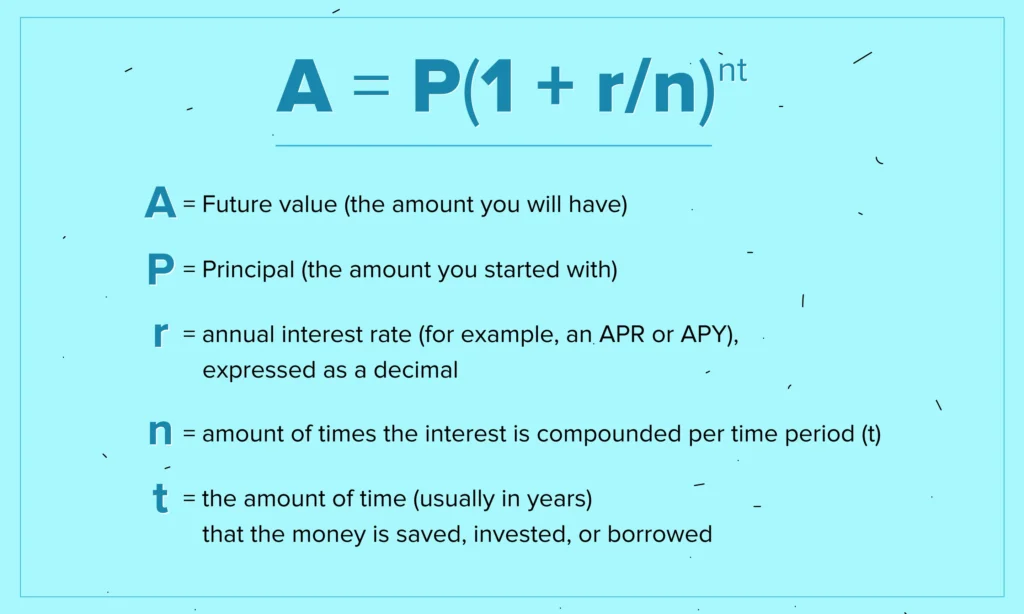
Formula:
A=P×(1+rn)ntA = P \times \left(1 + \frac{r}{n}\right)^{nt}A=P×(1+nr)nt
- A = future value
- P = initial investment (principal)
- r = annual interest rate
- n = number of compounding periods per year
- t = number of years
Want to see it in action? Use the compound interest formula in Excel for monthly investment.
Where Is Compound Interest Used in Investment?
Let’s look at countries where compound interest-based investments are most active:
India
- Best compound interest investment plans in India include:
- Public Provident Fund (PPF): ~7–8% annual
- Mutual Funds via SIPs (Systematic Investment Plans)
- Fixed Deposits with quarterly compounding
- Indians often use Excel-based SIP calculators to forecast returns.
Nigeria
- Popular compound interest investments in Nigeria:
- Treasury Bills (T-Bills) with rollover
- Cowrywise or PiggyVest “Flex” plans
- Mutual funds like ARM or Meristem
- Cooperative societies with reinvestment strategies
Ghana
- Government Bonds with auto-reinvestment
- Stanbic or Databank mutual funds
- Peer-to-peer (P2P) lending with compounding mechanisms
South Africa
- Compound interest investments in South Africa include:
- RSA Retail Savings Bonds
- Coronation and Allan Gray mutual funds
- Compound interest tracking apps like 22seven
Philippines
- Pag-IBIG MP2 Savings Program
- PERA Investment Funds (retirement accounts)
- Digital investment platforms like GCash + ATRAM funds
In each of these markets, compound interest isn’t just a mathematical advantage, it’s a time-tested path to financial security, especially when paired with long-term discipline.
Monthly Investment + Compound Interest
You don’t need a lump sum to start.
A monthly investment of even ₦10,000, ₹5,000, or ₱1,000 can snowball massively due to compounding – especially when automated.
Here’s a real example:
| Monthly Investment | Interest Rate | Duration | Future Value |
| ₦10,000 | 12% annually | 10 years | ₦2,302,000 |
| ₦10,000 | 12% annually | 20 years | ₦10,000,000+ |
Tools like the compound interest formula in Excel for monthly investment or online SIP calculators help visualize this.
Which Investment Gives Compound Interest?
Not all investments compound. Some offer simple interest, especially when fixed for short durations. Here’s how to know:
| Investment Type | Compound Interest? |
| Mutual Funds (Equity) | Yes |
| Fixed Deposits (FD) | Usually |
| Bonds with reinvestment | Yes |
| Real Estate | No (unless you reinvest rental income) |
| Stock Dividends | If reinvested |
| Crypto Staking | In most protocols |
| Day Trading | Typically no |
In general, investments that allow reinvestment of earnings or growth on capital gains support compound interest.
Benefits of Compound Interest in Investments
Here’s why this “silent multiplier” matters so much:
Time Works for You
The earlier you start, the better. Compounding works like gravity; it’s slow at first, then unstoppable.
Growth Without Effort
You earn returns not just on what you invest but on what your investment earns. That’s money earning money.
Inflation Defense
When your capital grows at 10–15% annually, you outpace average inflation rates across Nigeria, India, and the Philippines.
Wealth without Volatility
Unlike high-risk trades or timing the market, compounding rewards patience, not adrenaline.
Compound Interest Investment Strategies for 2025 and Beyond
As the global economy shifts, and interest rates fluctuate, here’s how to protect and multiply your wealth using compounding:
a. Use Fintech Tools
Platforms like:
- Risevest, Bamboo (Nigeria)
- Groww, Zerodha (India)
- GCash, COL Financial (Philippines)
Let you invest small amounts monthly with automated compounding.
b. Diversify Across Markets
Don’t just compound in Naira or Rupees, look into ETFs (like VOO, QQQ) or multi-currency funds to compound in stronger currencies.
c. Tax-Smart Reinvestment
Reinvest in tax-deferred or tax-efficient accounts. In Nigeria, consider pension-backed investment vehicles. In India: PPF or ELSS funds.
d. Automate & Forget
Set auto-debit from your salary to mutual funds or savings plans. Remove willpower from the equation.
How to Start (Even with Small Capital)
Here’s how someone in their 20s or 30s can begin compounding today:
| Country | Monthly Start | Platform Suggestion | Expected Return |
| Nigeria | ₦10,000 | PiggyVest, ARM, Bamboo | 10–15% |
| India | ₹5,000 | Groww, Zerodha, PPF | 8–12% |
| Ghana | GHS 200 | Stanbic Mutual Fund | 8–11% |
| South Africa | ZAR 300 | Coronation, 22seven | 9–13% |
| Philippines | ₱1,000 | GCash + ATRAM | 6–10% |
Compounding Is the Most Patient Form of Power
In a world that rewards short-term wins and flashy trading screenshots, compound interest quietly builds empires for those who commit early and stay consistent. Whether you’re in Lagos, Manila, Johannesburg, or Mumbai, the game is the same: start small, stay steady, reinvest everything.
Compound interest is a mindset.